
Chi siamo
About us
Our story
- 1861Italy is unified
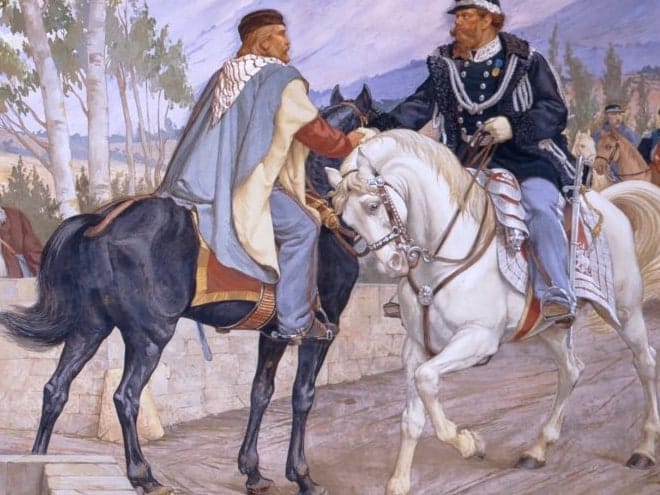
Pietro Aldi, Garibaldi and Victor Emmanuel II meet at Teano. Palazzo Pubblico, Siena In 1861, after centuries of division, Italy finally became a single state. Until then, the peninsula had been a patchwork of independent kingdoms, duchies, and territories, many of them ruled or heavily influenced by foreign powers. But a political union was not yet a national identity. A phrase often attributed to the statesman Massimo d’Azeglio captured the challenge: “Ora l’Italia è fatta, bisogna fare gli italiani” (“Now Italy is made, we must make Italians”). The new country had no shared culture to hold it together. Traditions, customs, and cuisines varied from town to town. Most importantly, there was no common language. Most people spoke their local dialect, and many of these were so different from one another that neighbors from different regions could barely understand each other. Italian, the language of Dante, Petrarca, and Boccaccio, was used mainly in literature and by a small, educated minority. At unification, most Italians could not read or write.
- Late 1800sMillions leave Italy
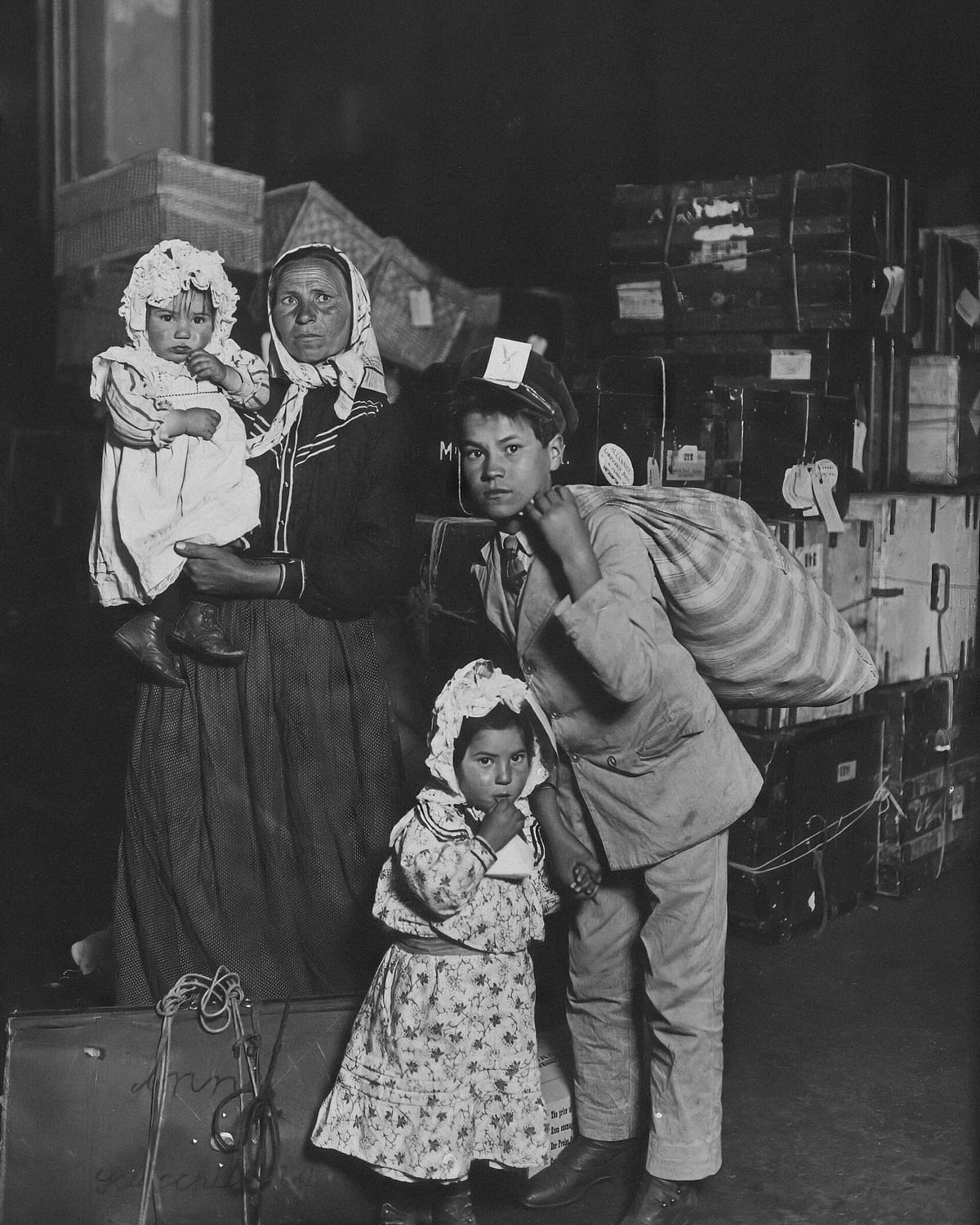
Lewis Hine, Italian family in the baggage room, Ellis Island, 1905 Unification did not bring prosperity to everyone. Poverty, heavy taxation, agricultural crises, overpopulation, and a lack of land and work made life extremely hard, especially in rural areas and in the South. Between the 1870s and the early 1900s, millions of Italians left their homeland in search of a better future, one of the largest migrations in modern history. They crossed the ocean to the United States, Argentina, and Brazil, and moved across Europe to France, Switzerland, and Germany. They carried few belongings, but they brought their dialects, their traditions, and their memories of home. In their new countries, many struggled to preserve their language and cultural roots, while their children and grandchildren gradually lost touch with them.
- 1889A society named after Dante
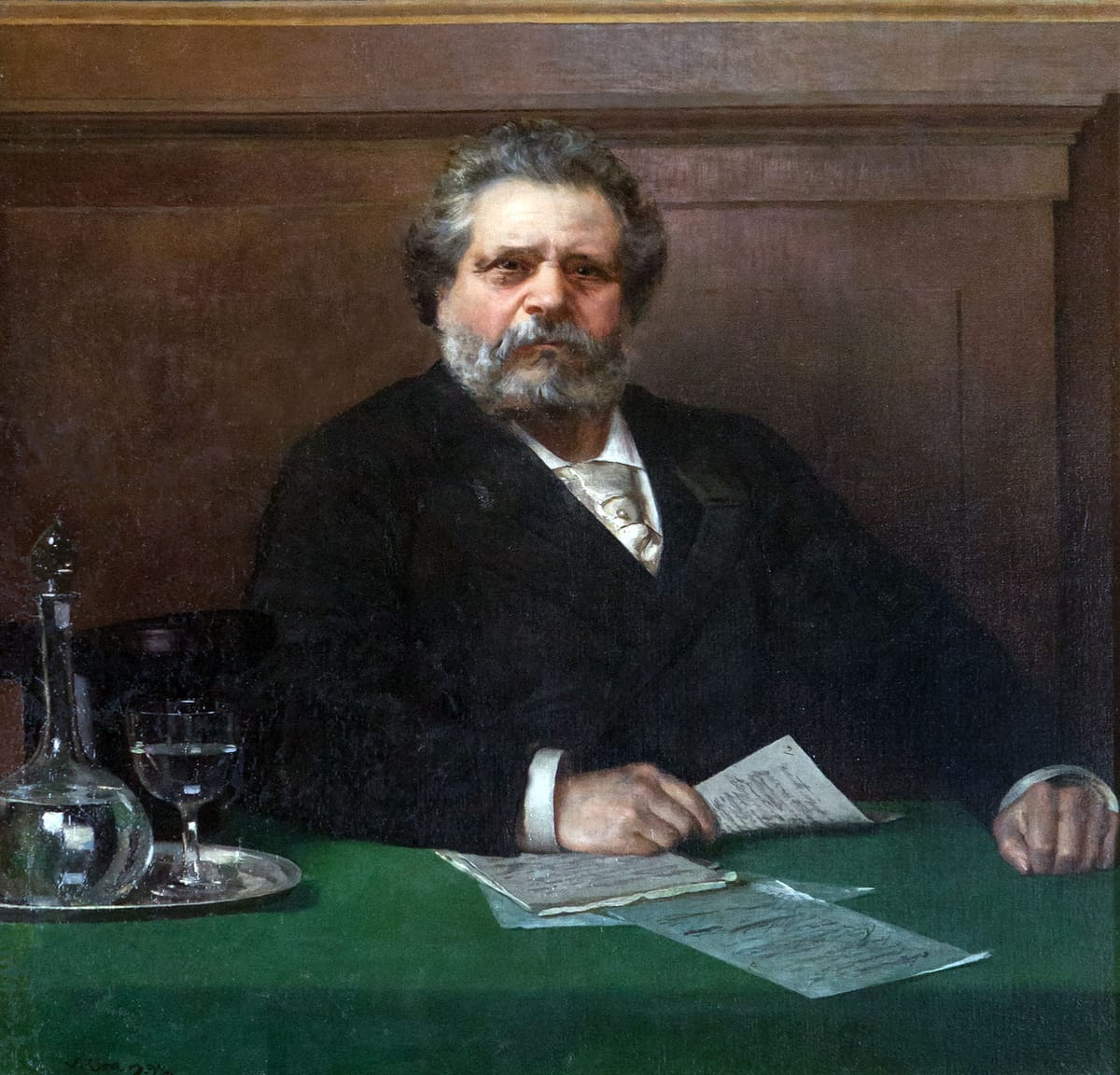
Vittorio Matteo Corcos, Giosuè Carducci, 1892 Italy was concerned about the millions of people who had left, and about the risk that their heritage would be forgotten in their new lives. In 1889, a group of intellectuals led by the poet Giosuè Carducci founded the Dante Alighieri Society in Rome. In 1893 it was formally recognized by Royal Decree of King Umberto I of Savoy. Its mission was to preserve and promote the Italian language and Italy’s cultural and social contributions to Western civilization, and to carry Italian language, literature, and culture beyond the country’s borders. The founders chose a name that stood for all of this: Dante Alighieri, Italy’s greatest poet and author of the Divine Comedy. His work helped shape the Italian literary language, making him the natural symbol of a culture united by words.
- WorldwideChapters on five continents
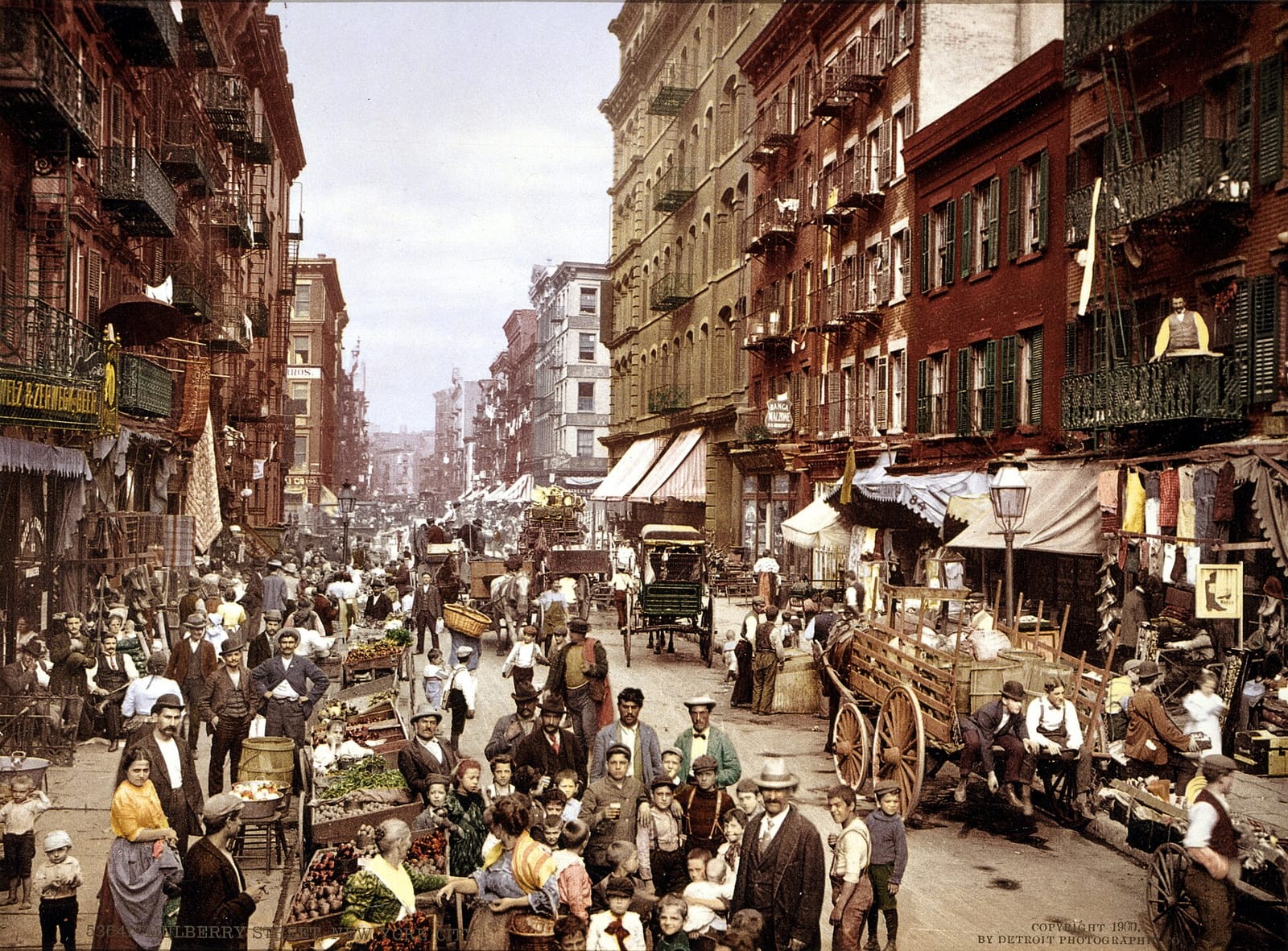
Detroit Photographic Co., Mulberry Street, New York City, c. 1900 Although it began in Italy, the Society soon spread to cities around the world where Italians had settled, and where admirers of Italy could gather, learn, and appreciate everything it has contributed in art, literature, music, science, and cuisine. Today the Dante Alighieri Society has grown to about 500 chapters worldwide, in major cities across five continents, including one right here in Charleston.
- 2017Our Charleston chapter
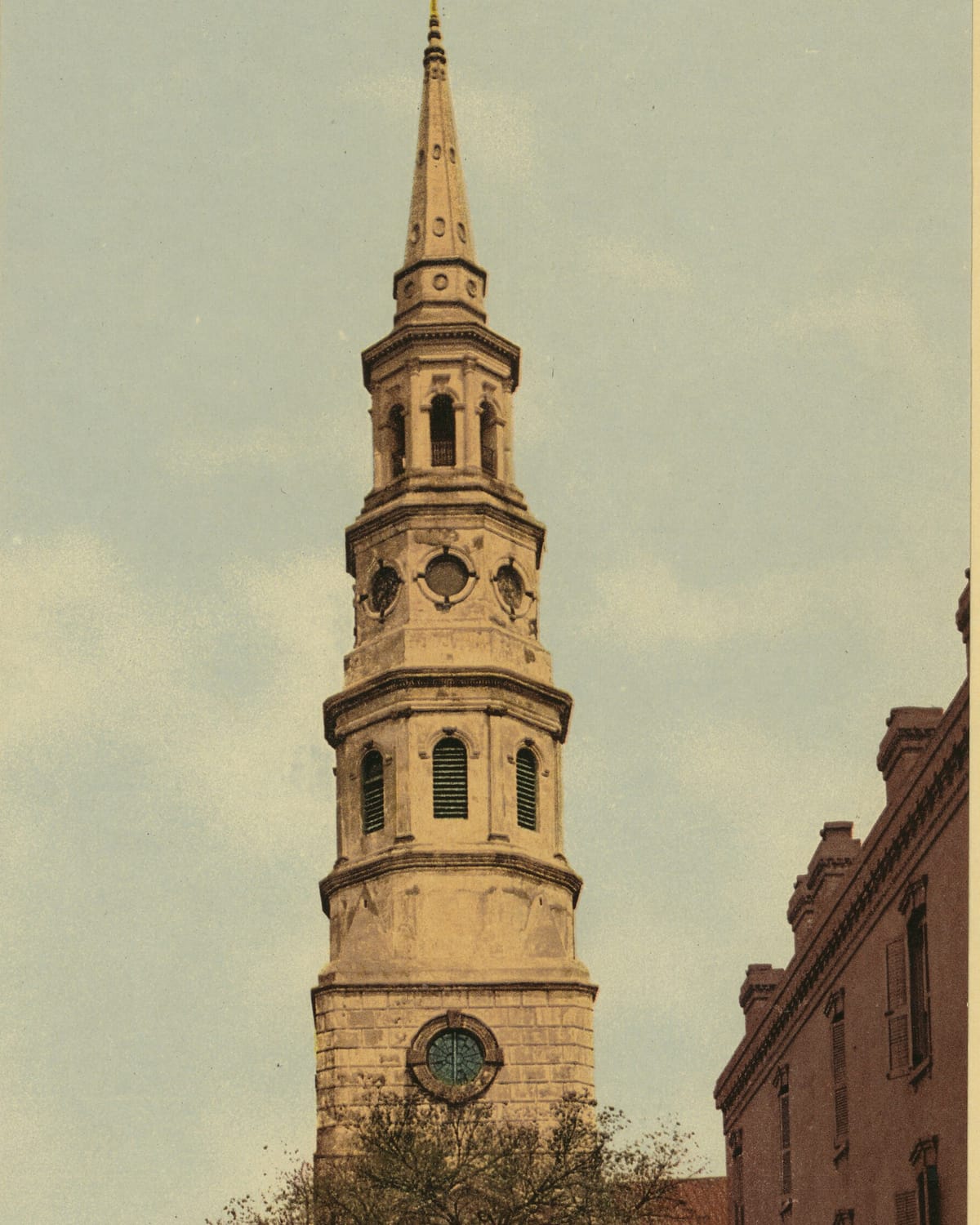
Detroit Photographic Co., St. Philip's Church, Charleston, c. 1900 The Charleston chapter was established in January 2017 by Claudio Pastor, Executive Director of DAS Miami, and Gloria Bellelli, then Consul General of Italy in Miami. They appointed Donatella Cappelletti della Porta, a Charleston resident since 2011, as president, a role she has held ever since.
Meet the team
 Donatella Cappelletti della PortaPresident
 Eugene MassamilloVice President
 Joe McGeeSecretary
- Richard CiccottoTreasurer
- William GiorgioPrograms and Partnerships